SEO software has become increasingly expensive, and that creates a problem for freelancers, small businesses, and growing marketing agencies. Everyone wants accurate keyword tracking, useful competitor data, and reliable website audits, but not everyone can justify paying premium prices for a tool like Semrush or Ahrefs.
That is where SE Ranking comes in.
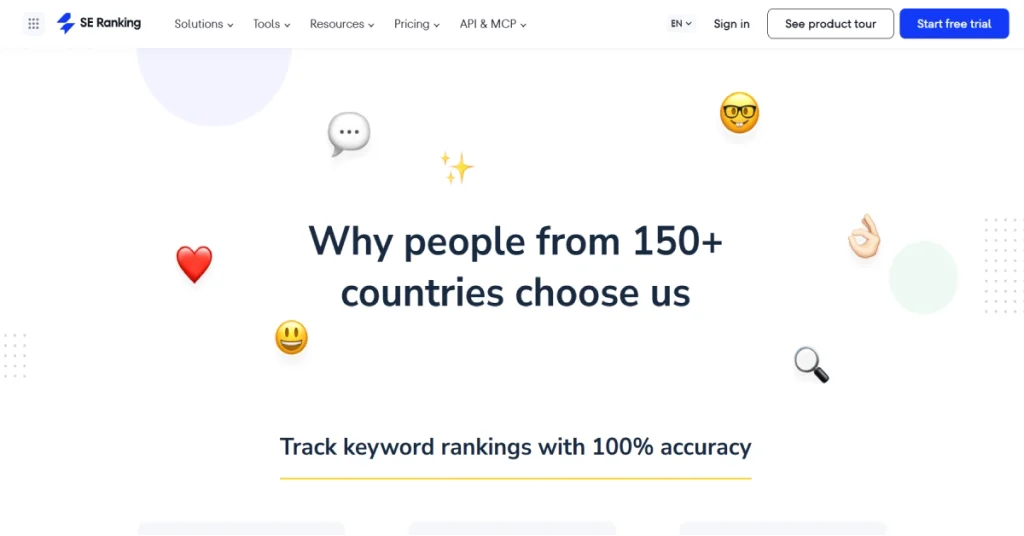
SE Ranking has built its reputation around offering a broad collection of SEO tools without making users pay for an oversized enterprise platform. It combines rank tracking, keyword research, competitor analysis, backlink monitoring, website audits, reporting, and increasingly important AI search visibility features in one dashboard.
But affordable doesn’t automatically mean better value. An SEO platform is only useful if its data is reliable, its workflow saves time, and its subscription matches what you actually need.
In this SE Ranking review 2026, we’ll look at what the software offers, where it performs well, where it has limitations, and whether it makes sense for bloggers, agencies, and businesses trying to grow organic traffic.
What Is SE Ranking?
SE Ranking is an all-in-one SEO platform designed to help website owners understand and improve their visibility in search engines. Its core functionality revolves around tracking keyword rankings, discovering new search opportunities, auditing websites for technical problems, monitoring backlinks, and analyzing competing domains.
Rather than requiring separate subscriptions for every SEO activity, SE Ranking brings many of these workflows together. a blogger can use the platform to identify keywords, inspect competing pages, track published content, and find technical SEO issues. An agency can use the same platform to manage multiple client websites, monitor rankings, and prepare performance reports.
SE Ranking has also expanded into AI search visibility, reflecting the growing importance of tracking how brands appear in AI-generated answers alongside traditional search results.
SE Ranking at a Glance
| Feature | Details |
|---|---|
| Product | SE Ranking |
| Website | seranking.com |
| Software Type | All-in-one SEO platform |
| Best For | Freelancers, agencies, bloggers, SEO teams |
| Main Features | Rank tracking, audits, keyword research, competitor analysis |
| AI Search Visibility | Available through dedicated capabilities |
| White-Label Reporting | Available on eligible agency offerings |
| Free Trial | Offered; check current terms |
| Pricing Model | Subscription with tier-based limits |
| Main Competitors | Semrush, Ahrefs, Moz Pro, Mangools |
| Overall Assessment | Strong option for cost-conscious SEO teams |
SE Ranking Pricing 2026: How Much Does It Cost?
SE Ranking currently offers two published standard subscription tiers, Core and Growth, along with custom Enterprise pricing. The platform has moved well beyond its older Essential, Pro, and Business structure, so articles quoting those older plans as the only available options can be misleading.
Prices checked against SE Ranking’s official pricing and FAQ pages, October 18, 2026. USD; taxes and regional pricing may vary.
$129/mo
Or $103.20/mo billed annually
10 projects, 2,000 daily tracked keywords, 100 daily AI prompts, 250K audited pages/month.
$279/mo
Or $223.20/mo billed annually
30 projects, 5,000 daily tracked keywords, 250 daily AI prompts, 2M audited pages/month.
Enterprise: Custom pricing for larger organizations that need additional capacity and support.
14-day free trial, no credit card required.View official pricing
The annual discount is 20%, but annual billing means a larger upfront commitment. Core works out to $1,238.40 per year, while Growth costs $2,678.40 annually at the published rates.
What About Extra Costs?
The headline subscription price is not necessarily your final cost. SE Ranking offers add-ons for additional keywords, content, local marketing, agency functions, and API usage.
its AI Search Add-on starts at $89 per month, or $71.20 per month with annual billing, for 200 monthly checks. One check represents one prompt on one AI platform.
This distinction matters because the AI Search features included in Core and Growth are not identical to buying unlimited AI visibility research. Agencies monitoring multiple brands should calculate how many prompts and AI platforms they actually need before subscribing.
SE Ranking Features: What Can You Actually Do?
1. Keyword Rank Tracking
Rank tracking is one of SE Ranking’s most practical features. The platform monitors keyword positions across major search engines, locations, and devices. For someone running a content website, this is often the first tool worth opening each morning. You can see whether an article has moved from position 18 to position 11, whether a page has dropped out of the top ten, or whether competitors are gaining visibility for your target terms.
The benefit is not simply knowing a keyword’s position. It is connecting ranking movements with publishing decisions. Suppose you publish a review targeting “best AI workflow automation tools.” You can add that keyword to your project, track its performance, and watch whether your optimization work makes a measurable difference.
SE Ranking also provides SERP feature tracking and competitor comparisons, which help explain why a page may be receiving fewer clicks despite holding a similar organic position.
2. Keyword Research
Keyword research is essential for any SEO strategy, but the challenge is finding keywords that offer a realistic opportunity rather than just impressive search-volume numbers. SE Ranking’s keyword research capabilities help users investigate search demand, difficulty, related queries, and competing results.
For bloggers, this is especially useful when building topic clusters. Instead of targeting only a broad keyword like “SEO tools,” you can research narrower topics involving pricing, comparisons, integrations, or specific use cases. A useful workflow is to begin with a seed keyword, examine related phrases, evaluate search intent, and then inspect the actual pages ranking on Google.
One warning: keyword difficulty is an estimate, not a guarantee. A low-difficulty score does not mean a new website will automatically rank, and a high score does not always mean a keyword is impossible.
The strongest decisions combine tool metrics with manual SERP analysis.
3. Competitor Research
Competitor research is another major reason to consider SE Ranking.
The platform allows you to investigate competing domains, discover the keywords they rank for, and examine opportunities your own website may be missing.
Imagine two websites publishing reviews of AI writing tools. One consistently ranks for comparison keywords, while the other publishes only individual reviews. By analyzing the stronger competitor, you might discover opportunities such as “Tool A vs Tool B,” “Tool A alternatives,” or “Tool A pricing.”
This is where competitor research becomes useful: it can reveal content patterns, not just individual keywords. Competitor traffic estimates should be treated as directional. They are not equivalent to seeing a website’s private Google Analytics account.
4. Website Audit
A technically weak website can struggle even when its content is useful.
SE Ranking’s Website Audit helps identify technical problems that may affect crawling, indexing, and overall site quality. These can include broken links, problematic redirects, missing metadata, duplicate content signals, and other technical SEO issues.
Its updated Health Score is intended to help users understand the overall condition of a website and prioritize important problems. SE Ranking also introduced new audit widgets, filtering, and reporting improvements during its recent product development.
For WordPress users, a monthly audit can be particularly valuable after theme changes, plugin updates, large content imports, or site migrations. But an audit score should never become the ultimate goal. Fixing a minor warning just to increase a score may matter less than resolving an indexing problem affecting an important page.
5. Backlink Analysis and Monitoring
Backlinks remain useful signals for understanding how websites earn authority and visibility.
SE Ranking provides backlink research and monitoring capabilities, allowing users to inspect referring domains, analyze competitor backlink profiles, and monitor changes over time. For a growing website, competitor backlink research can help identify relevant publications, directories, industry resources, and editorial opportunities.
It can also reveal which types of content naturally attract links. an original research article or a useful comparison resource may attract links that an ordinary product review does not. Still, backlink databases differ across SEO providers. SE Ranking, Ahrefs, and Semrush may show different counts for the same domain because their crawlers and indexes are not identical.
The more useful question is whether the data is sufficient to support your outreach and competitive research not whether every provider reports exactly the same number.
6. AI Search Visibility Tracking
This is one of SE Ranking’s most relevant developments in 2026.
Traditional rank tracking tells you where a page appears in Google search results. It does not necessarily tell you whether ChatGPT, Gemini, Perplexity, or Google’s AI-generated experiences mention your brand.
SE Ranking has introduced AI visibility features for monitoring brand mentions, citations, and visibility trends across AI-powered search experiences. Its supported AI tracking ecosystem includes Google AI Overviews, AI Mode, ChatGPT, Gemini, and Perplexity, with capabilities and limits depending on the plan and add-on.
This matters because a business can perform reasonably well in organic search but still be absent from AI-generated recommendations. tracking both traditional search visibility and AI mentions could become a meaningful reporting advantage. AI answers are variable. A brand mention in a tracked prompt is not a guarantee that every user will see the same answer. Treat AI visibility metrics as sampled observations, not exact universal rankings.
7. Content Marketing Tools
SE Ranking also provides content-oriented capabilities that can support SEO planning and optimization.
These tools are useful for researching topics, examining competing pages, preparing content, and evaluating whether an article addresses relevant search intent. For bloggers, the practical value comes from having keyword research and content optimization in the same broader workflow.
But content scores should not replace editorial judgment. Adding every suggested keyword to an article can make writing repetitive, and artificially extending content rarely improves usefulness. A good SEO article should answer the reader’s question thoroughly, provide credible information, and avoid unnecessary filler.
8. Local SEO
Local SEO is important for businesses that depend on customers in particular cities or neighborhoods. SE Ranking supports local visibility workflows, including location-specific rank tracking and local marketing capabilities.
This makes it relevant for agencies managing restaurants, clinics, professional services, retail businesses, and other location-dependent clients. The main advantage is being able to evaluate visibility at a more precise geographic level rather than relying only on broad national ranking data. For agencies with many locations, check the included limits and additional location charges before choosing a plan.
9. Reporting and Agency Features
SEO agencies need to communicate results clearly to clients, not simply collect data.
SE Ranking includes reporting features that help teams present ranking performance, website health, and other SEO metrics in a more structured format.
Eligible agency offerings provide additional functionality for managing client-facing workflows. The platform also supports integrations with Google Analytics 4, Google Search Console, Looker Studio, and automation systems. Its API and MCP capabilities have expanded during 2026. For teams producing recurring client reports, this can reduce the amount of manual spreadsheet work required each month.
SE Ranking vs Semrush vs Ahrefs
All three platforms cover important SEO workflows, but they are not identical.
| Feature | SE Ranking | Semrush | Ahrefs |
|---|---|---|---|
| Keyword Research | Yes | Yes | Yes |
| Rank Tracking | Yes | Yes | Yes |
| Site Audits | Yes | Yes | Yes |
| Backlink Research | Yes | Yes | Yes |
| Competitor Research | Yes | Yes | Yes |
| AI Search Features | Yes | Yes | Yes, product-dependent |
| Agency Reporting | Strong focus | Strong focus | Available capabilities |
| Best Fit | Cost-conscious SEO teams | Broad marketing teams | SEO research and backlink-focused workflows |
SE Ranking makes the most sense when you want a unified SEO workflow with predictable project and keyword allowances. Semrush may be a better choice for organizations that want a broader digital marketing ecosystem. Ahrefs is particularly attractive to users whose workflows revolve around backlink intelligence, organic competitor research, and content opportunities.
There is no universal winner. A freelancer tracking a handful of websites may value different things from an enterprise SEO team managing dozens of international markets. The most useful comparison is to take the same five keywords, three competitors, and one website audit into each platform during a trial. Compare data coverage, ease of use, reporting, and cost before committing.
SE Ranking Pros and Cons
| Pros | Cons |
|---|---|
| Combines major SEO workflows in one platform. | The $129 monthly entry price may be high for hobby bloggers. |
| Daily keyword tracking with device and location targeting. | Advanced agency and AI features can add to the subscription cost. |
| Useful technical audit and competitor research tools. | Keyword and backlink estimates can differ from other providers. |
| AI search visibility capabilities alongside traditional SEO. | Multiple tools and metrics create a learning curve for beginners. |
| Reporting, integrations, API, and agency-oriented features. | Project, keyword, prompt, and audit limits require planning. |
| Published limits make it easier to compare subscription tiers. | AI search metrics are still evolving across the industry. |
| Free trial allows evaluation before paying. |
Who Should Use SE Ranking?
Bloggers and Affiliate Marketers
SE Ranking can be useful for bloggers who regularly publish product reviews, comparisons, tutorials, and informational content. Keyword research helps identify opportunities before writing. Competitor analysis reveals gaps, and rank tracking shows how articles perform after publication.
Bloggers managing only one small website should consider whether they will use enough features to justify the subscription.
SEO Freelancers
Freelancers are a strong potential fit because they often need multiple SEO capabilities without maintaining several separate software subscriptions.
The combination of audits, keyword tracking, backlink analysis, and reporting can support recurring client work.
Digital Marketing Agencies
Agencies may get the most value from SE Ranking, especially when managing multiple websites and producing regular reports.
Growth offers higher project, keyword, and audit allowances than Core, which can make it more suitable for teams with expanding client portfolios.
E-commerce Businesses
Online stores can use SE Ranking to track commercial keywords, analyze competing stores, monitor technical issues, and identify product-category content opportunities. For large e-commerce sites, the number of pages available for auditing becomes especially important.
Who Should Skip It?
SE Ranking may not be the right purchase for someone who only needs to check a few keyword positions occasionally. It may also be unnecessary for beginners who have not yet set up Google Search Console, resolved basic indexing problems, or established a consistent publishing workflow.
Start with free first-party data before paying for advanced SEO intelligence.
Is SE Ranking Accurate?
SE Ranking uses large keyword, domain, and backlink databases alongside data retrieved from search engines. Its official documentation currently reports billions of keywords and domain profiles, with regularly updated datasets.
no third-party SEO platform can know every website’s exact traffic, conversion rate, or complete Google ranking history. Rank tracking for configured keywords is different from estimating an entire competitor’s traffic. The former can be checked against observed search results, while the latter relies on models and assumptions.
A sensible approach is to compare SE Ranking’s data with your own Google Search Console account and use third-party metrics primarily for research, prioritization, and trend analysis.
Is SE Ranking Good for Beginners?
SE Ranking is accessible enough for motivated beginners, but its current pricing makes it a more serious investment than many entry-level SEO tools.The dashboard brings multiple workflows together, which can reduce the need to learn several different products. At the same time, terms such as keyword difficulty, referring domains, share of voice, crawl depth, and AI visibility require some SEO knowledge.
Beginners should focus first on keyword research, rank tracking, and website audits rather than attempting to master every feature at once. SE Ranking also provides educational resources through its Academy, Help Center, and webinars.
SE Ranking Alternatives Worth Considering
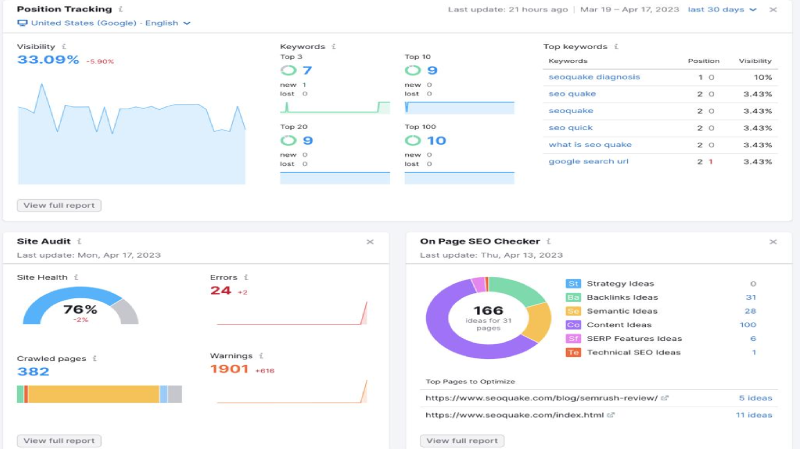
Best for teams that need a broad digital marketing toolkit covering SEO research, competitive intelligence, and additional marketing workflows. Its breadth can be attractive, but pricing and add-on requirements deserve careful comparison.
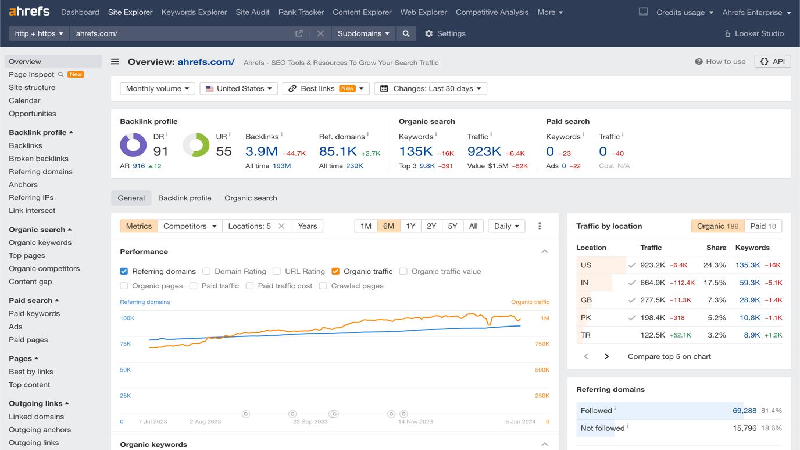
Particularly appealing for backlink research, organic competitor analysis, and content discovery. A good alternative when SEO research is the primary focus.
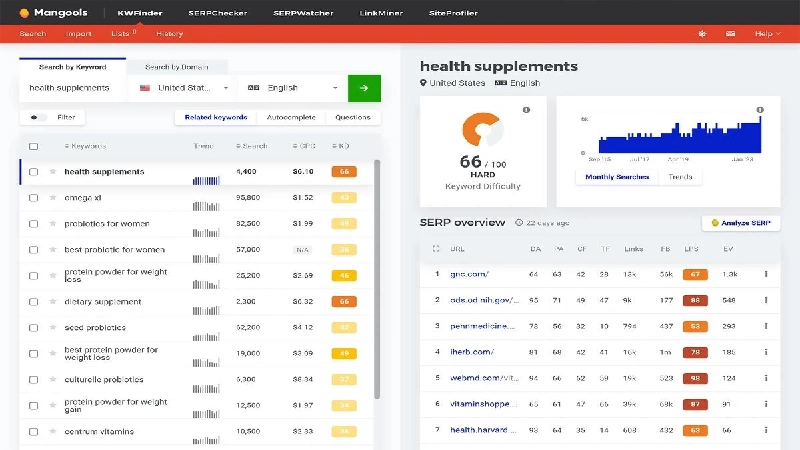
Worth considering for smaller sites that prefer a simpler keyword research and tracking workflow instead of a larger all-in-one platform.
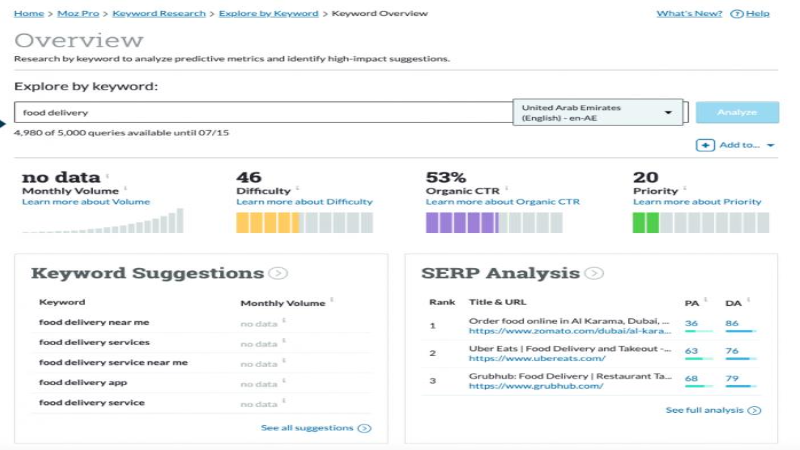
An established alternative for keyword research, site auditing, and SEO campaign management, especially for teams already familiar with Moz metrics.
Is SE Ranking Worth It in 2026?
SE Ranking is worth considering if SEO is an ongoing part of your business rather than an occasional task. For an agency managing several paying clients, the cost of a subscription can be easier to justify because rank tracking, audits, research, and reporting support recurring work.
For a content business, the calculation is different. You need to consider how many articles you publish, how frequently you research competitors, and whether you have enough organic search data to make use of the platform. The addition of AI visibility features makes SE Ranking more interesting in 2026. Search discovery is no longer limited to traditional blue links, and businesses increasingly want to understand how their brands appear in AI-generated answers.
Still, buying a tool does not automatically improve rankings. The real return comes from using its findings to publish better content, fix important technical problems, and improve pages that already show potential.
Final Verdict
SE Ranking has evolved into a comprehensive SEO and AI search visibility platform that deserves consideration alongside more established names. Its strongest selling point is workflow coverage: keyword research, rank tracking, competitor analysis, technical audits, backlink monitoring, reporting, and AI search features are available within a connected ecosystem.
The biggest drawback is cost. With Core starting at $129 per month on monthly billing, SE Ranking is not necessarily the budget tool that some older reviews describe. Agencies and established marketing teams may find that reasonable, but new bloggers should think carefully before subscribing.
Our editorial verdict
SE Ranking is a strong fit for freelancers, agencies, and growing businesses that actively use multiple SEO workflows. For small websites with limited budgets, the 14-day trial is the sensible starting point.
Frequently Asked Questions
Is SE Ranking free?
SE Ranking does not offer a permanent free subscription, but it provides a 14-day free trial without requiring a credit card. Some free tools are also available on its website.
How much does SE Ranking cost in 2026?
Core costs $129 per month or $103.20 per month billed annually. Growth costs $279 per month or $223.20 per month billed annually. Enterprise uses custom pricing.
Is SE Ranking better than Semrush?
It depends on your needs. SE Ranking offers a focused combination of SEO, reporting, and AI visibility tools, while Semrush provides a broader marketing ecosystem. Compare the specific features and limits you need rather than choosing solely by brand recognition.
Can SE Ranking track Google rankings daily?
Yes. Its rank tracker supports daily keyword tracking, including location- and device-specific monitoring.
Does SE Ranking offer AI visibility tracking?
Yes. SE Ranking offers capabilities for monitoring visibility across AI search experiences, including ChatGPT, Gemini, Perplexity, and Google’s AI systems. Limits depend on the subscription and add-ons.
Is SE Ranking suitable for WordPress websites?
Yes. It can research keywords, track rankings, audit technical SEO issues, and analyze competitors for WordPress websites. It works as an external SEO platform rather than requiring WordPress to run its core research functions.
Can SE Ranking replace Ahrefs?
For some workflows, yes. SE Ranking covers keyword research, backlinks, competitor analysis, and technical audits. However, teams relying heavily on particular Ahrefs datasets or features should compare both products before switching.